

What does B2B matchmaking mean in plain terms?
B2B stands for business to business. At an event it means every participant can see a list of the other participants who agreed to appear in it, requests a meeting with whoever matters to them at a set time, and the other side accepts or declines. On the day, both sit at a numbered table for a short, agreed slot.
The idea is simple, but running it by hand for dozens of participants turns into a mess of messages and spreadsheets. That is why it is usually run on a platform.
How does B2B matchmaking work on the Kunoze conference platform?
The Kunoze conference platform has a dedicated B2B module that works in this order:
- Opt-in directory: only those who agree appear in the directory, in line with the Personal Data Protection Law.
- Time slots: the organiser sets the meeting slots and the number of tables.
- Request and reply: a participant sends a request, the other side is notified by email and accepts or declines.
- Automatic tables: once accepted, the platform assigns a table automatically.
- Follow-up: the organiser marks whether the meeting was held or was a no-show, and exports the data as CSV.
Notification details are on the email integration page.
When does an event need B2B matchmaking?
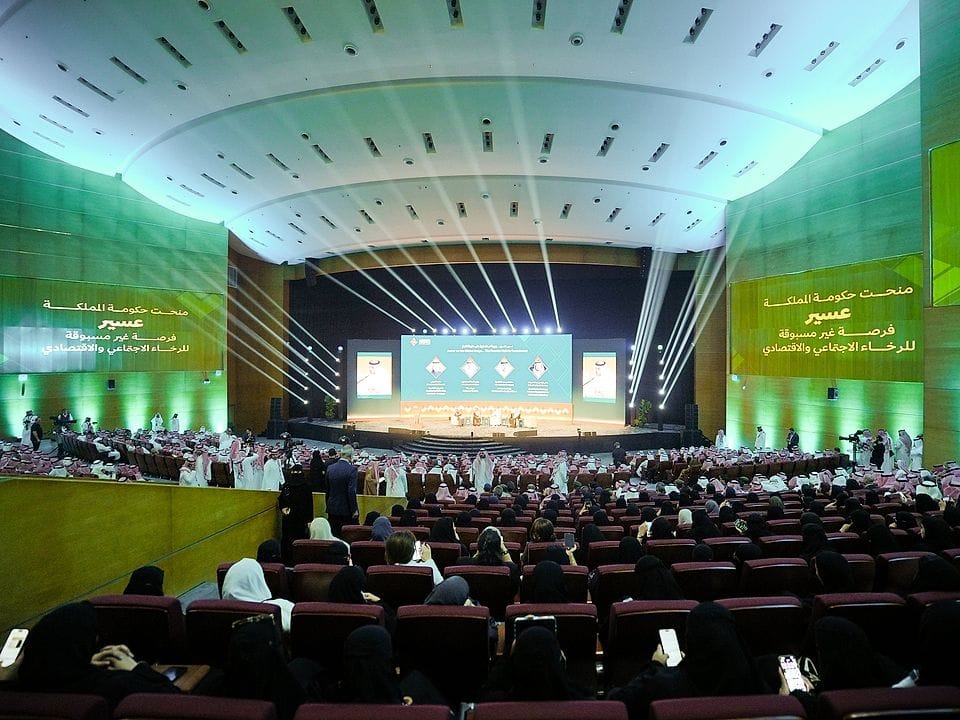
Any event whose purpose is to build relationships between two sides needs it: bilateral business forums between two countries' business communities, investment forums that bring investors and entities together, and exhibitions that connect suppliers and buyers. At the Saudi-Spanish Business Forum, sector roundtables sat at the heart of the programme, a group form of the same idea organised by sector.
A scientific conference rarely needs it, because its goal is knowledge rather than deals. The difference is explained in the conference, forum and summit comparison.
What are the common mistakes with B2B meetings?
- Opening bookings on the day itself, leaving participants no time to choose.
- Tables without clear numbers, so meeting time is lost looking for them.
- Scheduling meetings at the same time as the main session.
- No reminder before the meeting, so no-shows rise.
How does a participant prepare for a good B2B meeting?
A short meeting needs more preparation than a long one, because there is no time for slow introductions. We advise participants to take three steps before the event. First, update the directory profile with a clear description of the entity and what it is looking for; a vague profile receives no requests. Second, pick a small number of priority meetings rather than filling the whole schedule. Third, prepare something to leave behind: a business card or a link to a short presentation.
The organiser prepares too: tables with large, clear numbers, a help desk near the meeting area, and a host who keeps time and signals the end of each slot. After the event, each participant receives a summary of their meetings, so a short conversation becomes the start of real follow-up.


 Scan to chat on WhatsApp