
What events do chambers of commerce usually host?
Saudi Arabia's regional chambers and their national federation host a wide range of events: bilateral business forums with visiting delegations, sector meetings between members and government bodies, regional investment forums in partnership with regional emirates, professional workshops and conferences, and honours evenings for members and sponsors. What they share is a commercial goal: a new relationship, a deal or a partnership.
Chamber premises themselves often suit these events; our city data lists Federation and Chamber halls among the suitable venue types in Riyadh and most regions.
What makes a business forum miss its goal?
- A long podium and a short dialogue: speech after speech eats the time meant for meetings between guests.
- Unplanned tables: guests do not know who they sit with or why, so each delegation drifts back to its own colleagues.
- An improvised signing: an unprepared table, flags in the wrong place and a photo nobody can publish.
- One language for two audiences: a foreign delegation without simultaneous interpretation loses half the content.
- Lost attendance data: no accurate list of who came and who met whom, so no follow-up.
How does Kunoze design roundtables and business meetings?
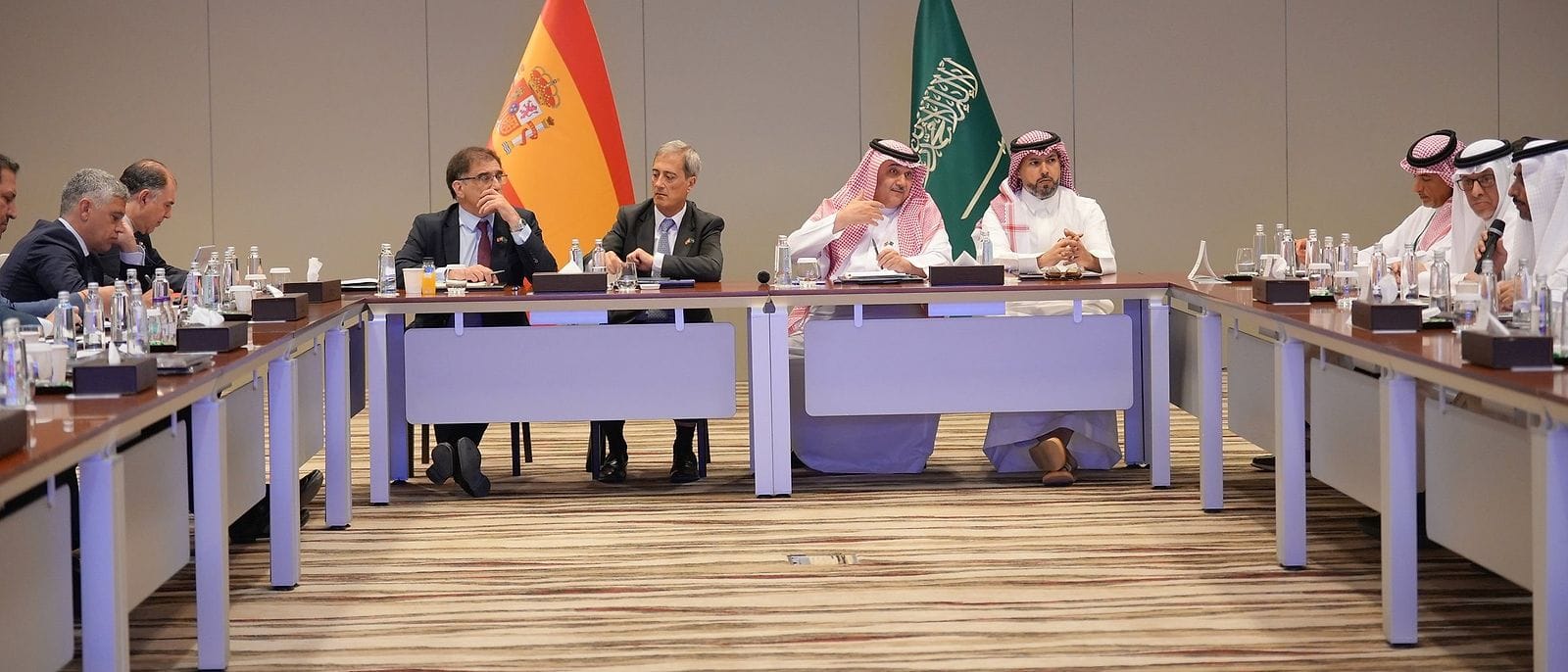
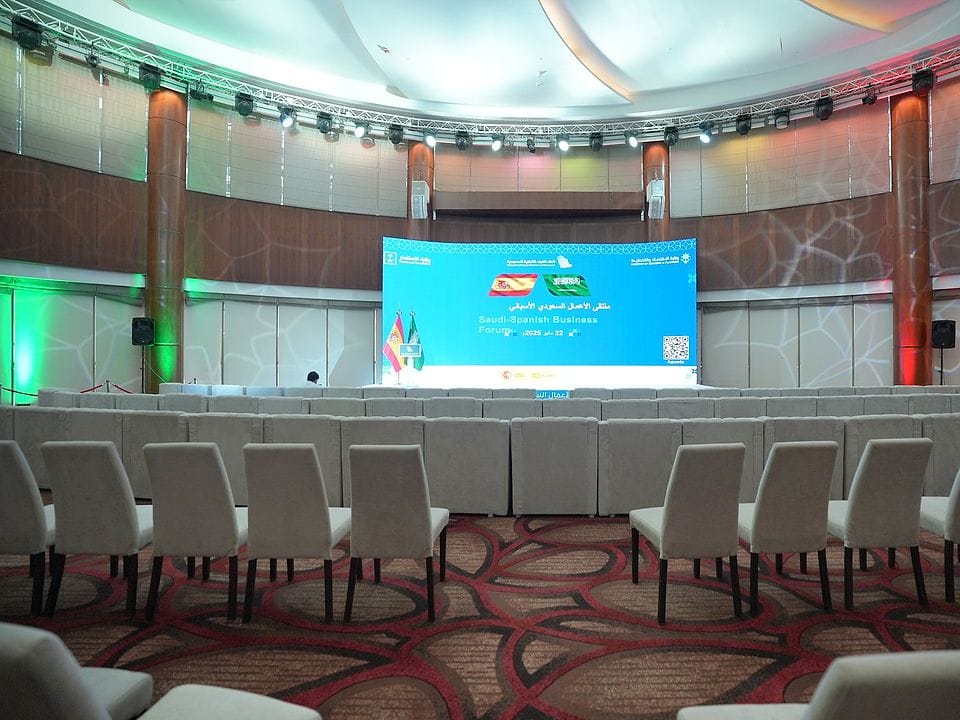
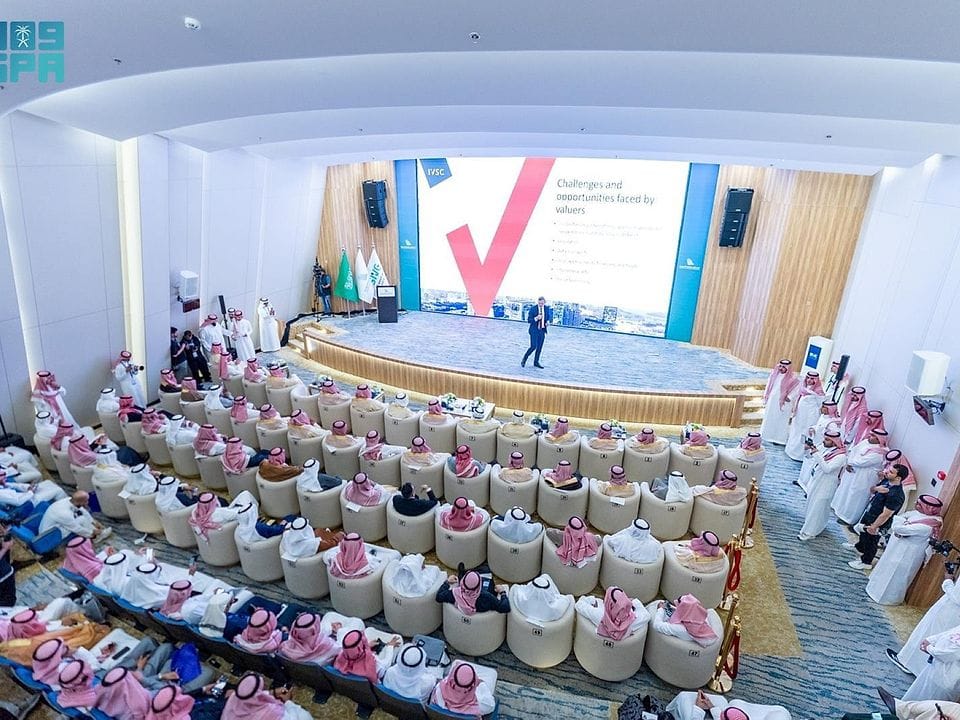
At the Saudi-Spanish Business Forum we set up a round hall with sector roundtables, so business people from both countries sat by sector rather than by nationality, which opens the conversation straight onto opportunities. That seating is prepared before the forum from attendance lists and sectors, then printed on table cards and in the guest guide.
When a chamber wants specific one-to-one appointments booked in advance, the better format is B2B matchmaking with a meeting schedule and numbered tables. The Kunoze conference platform supports it with an opt-in participant directory, meeting requests that can be accepted or declined, and automatic table allocation.
How do you stage an MoU signing properly?
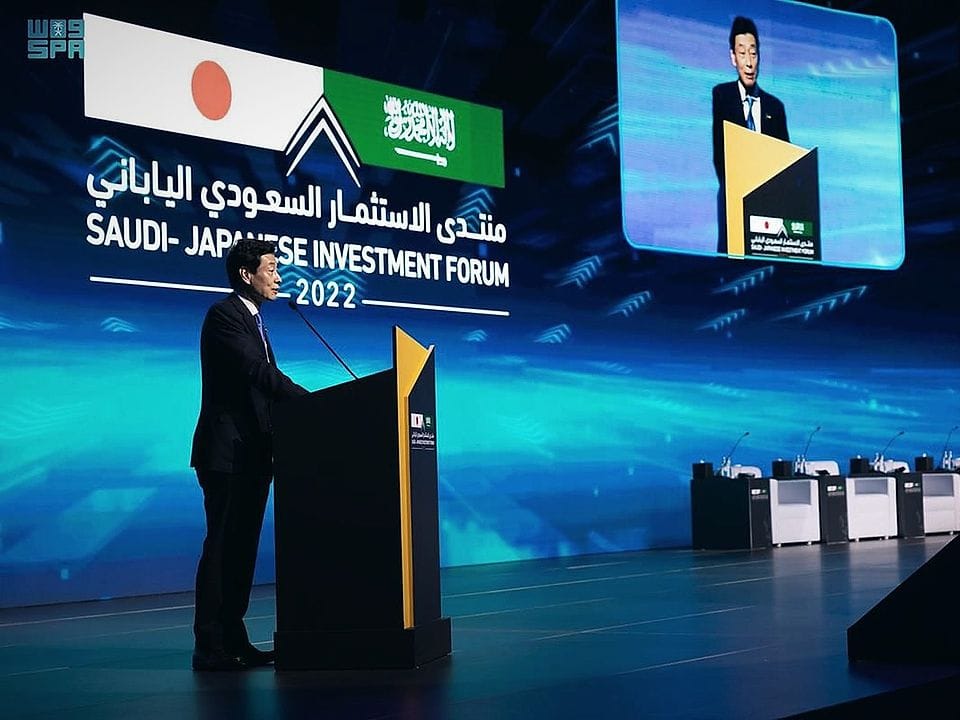
The signing is the photo that gets published, so we treat it as its own segment: a signing stage separate from the speeches podium, a table with both countries' or both entities' flags, a backdrop carrying the forum name, a clear route for signatories up and down, and a photographer in position before the segment starts. At the Saudi-Spanish Business Forum the MoU signing stage was part of the stage design from the outset.
For the step-by-step detail, see the MoU signing checklist and our article on MoU signing ceremonies.
What does Kunoze deliver for each chamber need?
The table maps chamber needs to what we actually deliver at business forums and investment forums.
| Need | What we deliver |
|---|---|
| Bilateral business forum | Hall, sector roundtables, podium and both countries' flags |
| Scheduled meetings between members and delegations | Meeting schedule, numbered tables and a participant guide |
| MoU signings | Separate signing stage, backdrop, signatory order and photography |
| Foreign delegation | Simultaneous interpretation, sound and bilingual screens |
| Member exhibition | Booths in each entity's identity from our factories, exhibition layout |
| Honouring sponsors and members | Shields, gifts and the honours segment |
| Follow-up after the forum | Attendance lists, closing report and media documentation |
Why does it help that the organiser sits in the chambers' building?
Kunoze's head office is in the Federation of Saudi Chambers building in Riyadh, minutes from most of the capital's major halls. That proximity shortens coordination meetings and site visits, and keeps the team available for a quick review before the forum. Chambers in other regions work with our Jeddah and Abha offices, while the Riyadh office serves the Eastern Province and the north with a team that travels to site.
The offices directory shows which cities each office serves.
How are invitations and guest lists managed?
A good forum starts with the invitation list. A chamber knows its members, but a bilateral forum adds a delegation, government bodies and sponsors, and each group needs its own invitation wording and registration route. We start from one combined list with name, entity, sector and preferred language, send invitations in the right formal wording for each group, and chase confirmations until the list is complete, early enough to plan the tables.
Ready-made formal invitation wording keeps Arabic and English consistent, while the platform imports the list from an Excel file and sends tickets automatically, so every guest reaches the right table without a queue at reception.
What does the chamber keep after the forum?
A forum is the chamber's investment in its members' relationships, and its value shows in the weeks that follow. So after the forum we hand over the actual attendance list, media documentation of the sessions and signings, and a closing report summarising the programme and what was signed. These serve the chamber's newsletter, website and periodic reports, and give members who met at the forum a basis for follow-up.
If the chamber runs the forum every year, reviewing the last edition together is the best starting point for the next, as we do with recurring forums.
What does the chamber gain from this approach?
- Real dialogue time: a programme that protects meeting time from long speeches.
- A signing photo worth publishing: a ceremony prepared in every detail.
- A bilingual experience: interpretation and screens that serve the delegation as well as members.
- Data you can follow up: who attended and who met whom, in one file after the forum.
- In-house production: member booths and sponsor shields from our factories, on time.

 Scan to chat on WhatsApp