
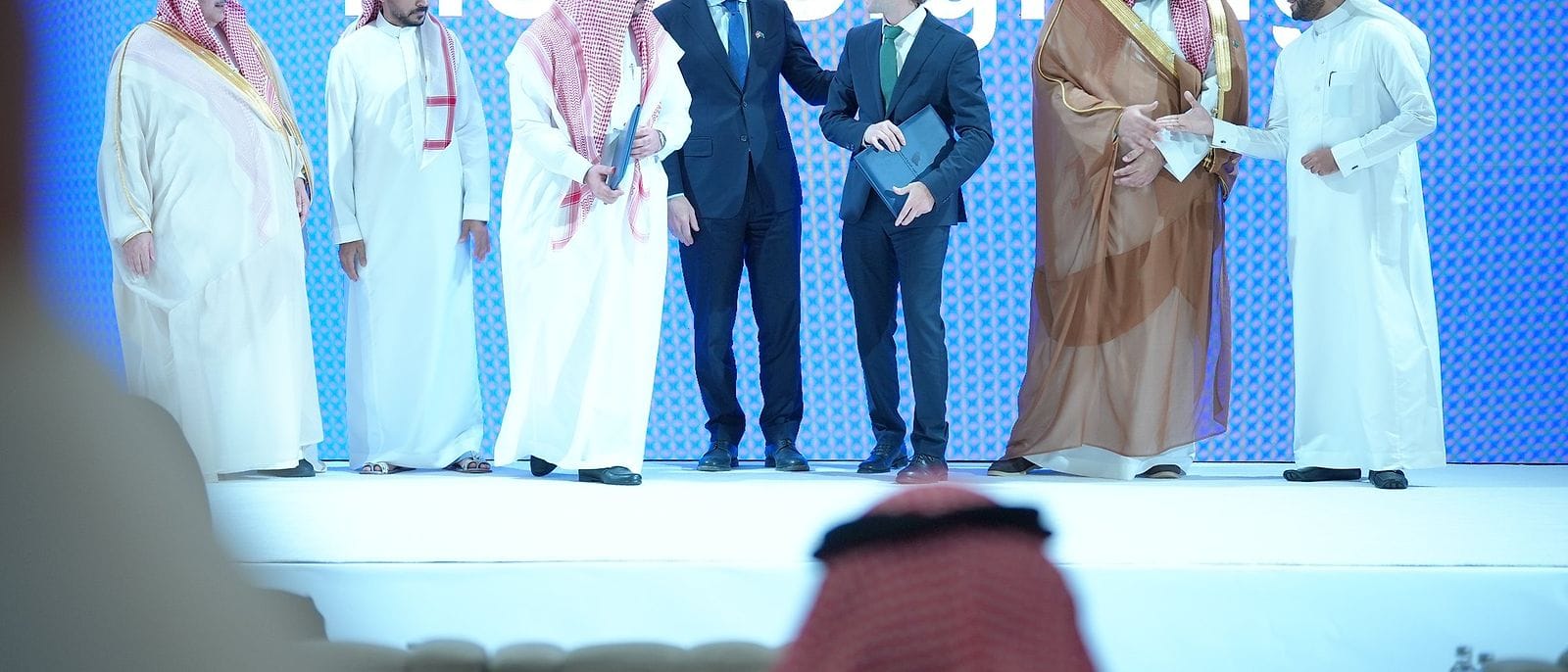
The photo of an MoU signing is made before the event, not during it: a separate signing stage with a backdrop carrying both parties' logos, flags and seats in the order approved by the protocol office, a table set with folders and pens, a written ceremony sequence, and a photographer in a fixed position. The signing takes a minute; its photo stays on websites and in reports for years.
Why does one minute of signing deserve this much preparation?
At bilateral forums and conferences, the signing ceremony is often the moment the whole event is reduced to one news item and one photo. Entities publish it in their statements, the media pick it, and annual reports come back to it. Any flaw, a flag in the wrong place, a pen that will not write, someone crossing in front of the camera, stays visible longer than any other mistake of the day.
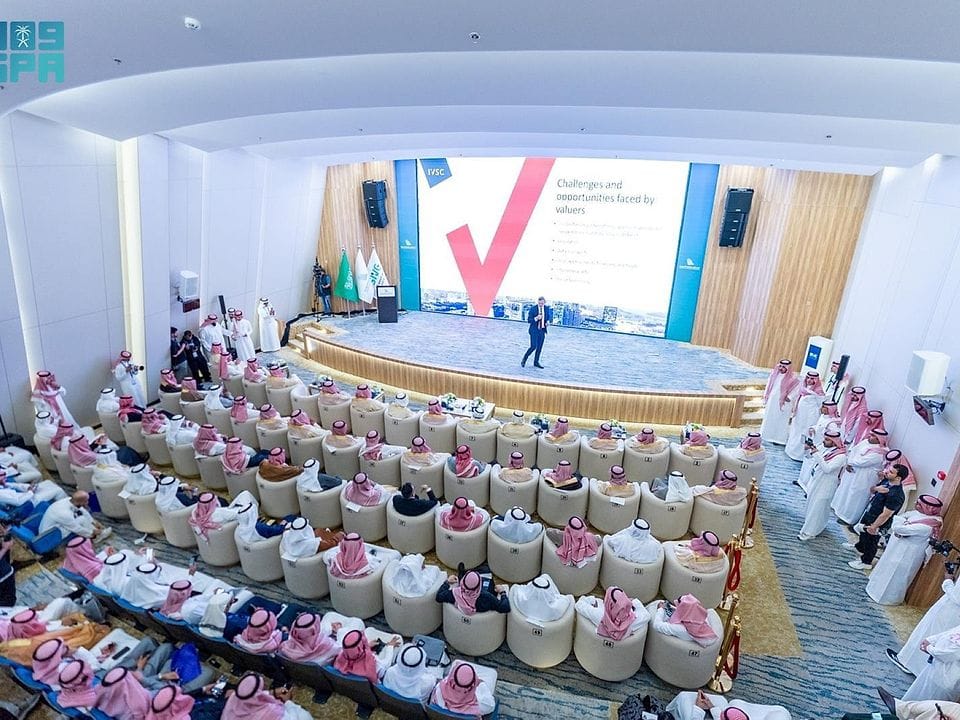
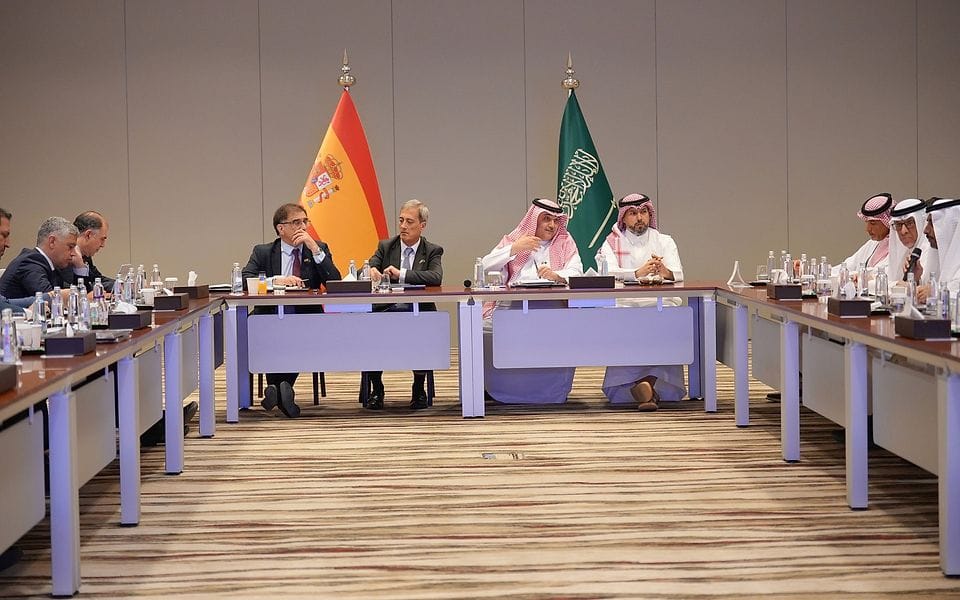
At the Saudi-Spanish Business Forum, the MoU signing stage was a scope item in its own right, alongside the podium, flags and protocol. At the Saudi-Japan Investment Forum, signing ceremonies and protocol were part of an official ministerial-level platform. In both cases the signing stage was designed with the hall from the start.
What is the difference between an MoU and an agreement, and why does it matter to the organiser?
A memorandum of understanding usually expresses both parties' intention to cooperate and its general framework, while an agreement usually carries more specific obligations. The legal distinction is the signing entities' responsibility, but the organiser needs to know it for two reasons: to word the announcement from the podium with the correct title, and to prepare the folders and screen with the exact title of each document. The memorandum of understanding glossary entry explains the difference in plain language.
Why do signings need a separate stage?
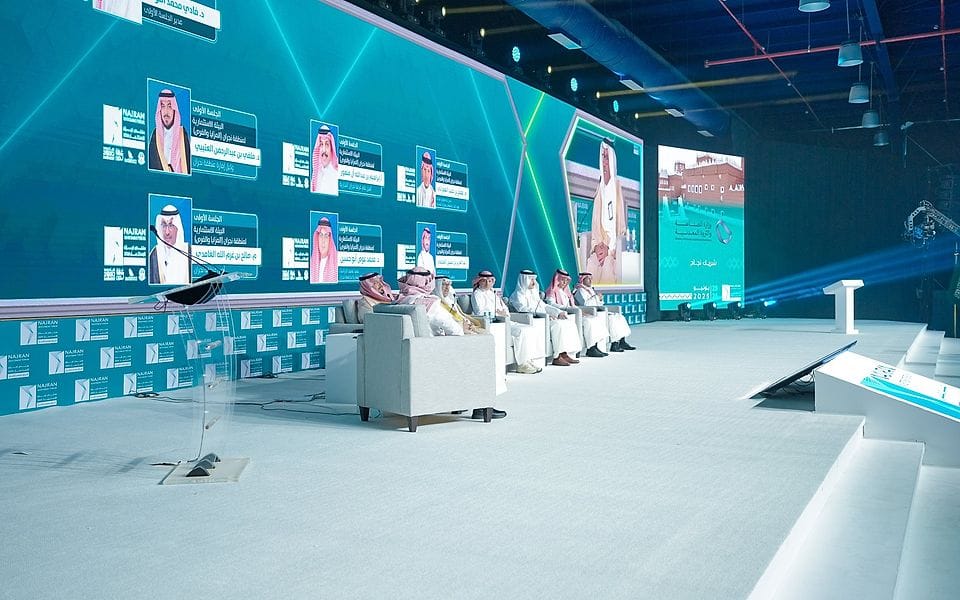
Do not sign at the session table. A session table is crowded with microphones, papers and speaker name plates, and its backdrop is designed for discussion, not for a photograph. A separate signing stage has a clean backdrop with both parties' logos and the event logo, an uncluttered table, and front lighting set for photography.
Its position in the hall plan should let the audience see it, give the signatories a short, clear route from their seats, and leave a fixed spot in front for photographers that does not block the view from the front rows.
When should the signing come in the programme? It works best at a fixed time everyone knows, after the main speeches and before senior guests leave, not at an open-ended close that some signatories may leave before. Put it in the conference run of show with a set duration for each signing.
How are flags and signatories arranged?
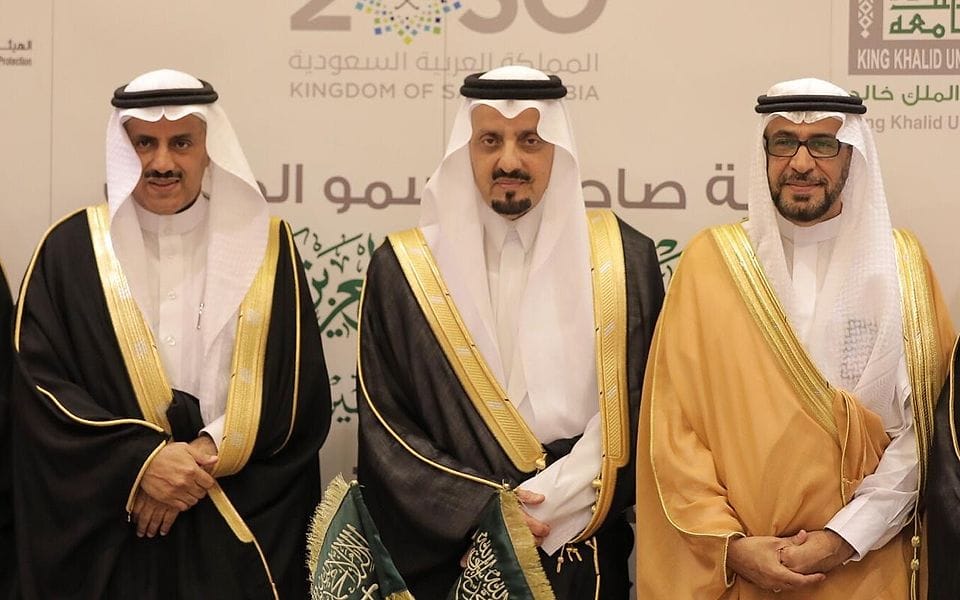
The order of flags and seats follows what the host entity's protocol office approves; it is never left to the delivery team's judgement. Our role is to get that order in writing before the event and carry it out precisely: flags behind the signatories, each signatory in the seat protocol has assigned, and witnesses and officials behind them in a pre-written order.
That order rests on the principle of precedence, deciding who goes first and who sits where according to official rank. The order of precedence glossary entry explains the principle and how it is applied.
What goes on the signing table?
| Item | Detail |
|---|---|
| Copies of the MoU | Two copies in folders in the event's identity, made by Kunoze on request |
| Pens | Two tested pens, and two spares close to the table |
| Name plates | On the table facing the photographer, in a script readable in the photo |
| The table itself | A clean cover, with no extra papers or water bottles in the shot |
Folders are opened at the signature page in advance, and the signing spot is marked with a small tab that does not show in the photo, so no signatory hunts for the page in front of the camera. The MoU signing checklist gathers all of these items in a downloadable list.
What is the sequence of a signing ceremony?
- The announcement from the podium, naming the MoU and both parties.
- The signatories walk up to their seats.
- Both copies are signed.
- The folders are exchanged.
- A handshake, looking towards the camera.
- The photo with the witnesses, then back to the seats.
The protocol lead allows a few seconds for each step and signals the signatories to move on without stepping into the frame. The main screen shows the MoU's title and both parties' logos throughout the ceremony.
What if there are several signings in the same session?
At large forums several MoUs may be signed back to back. Here the written order matters more than anything: a list of the MoUs in the announcement order approved by protocol, folders numbered and labelled with each MoU's name, and a coordinator behind the stage who readies the next signatories before the current signing ends.
A screen is prepared for each MoU with its title and both parties' logos, changing with every signing. Agree in advance whether there will be one group photo of all signatories at the end, or a photo per signing, because that changes the standing order and the time needed.
How is the signing backdrop designed?
The backdrop is half the photo. It carries both parties' logos at equal size unless protocol decides otherwise, the event logo in a clear position that does not crowd them, and the occasion's name and date in a script readable in a thumbnail on a phone. Its colours are chosen so they do not swallow the flags or the faces, and it is printed on a matt material so it does not bounce the camera flash.
The backdrop's height is set from the head height of people standing in the group photo with the witnesses, not just from seated height, so logos are not cut off when everyone stands.
How is the signing ceremony rehearsed?
A short rehearsal on the stage itself, with stand-ins in the signatories' and witnesses' places, while the protocol lead walks through the whole sequence: announcement, walk-up, signing, exchange, handshake and photo. Rehearsal reveals what paper does not: a seat that is awkward to reach, a flag hidden by a pillar, or a camera angle that pulls the screen into the shot with distracting light.
Where does the photographer stand?
In a fixed position in front of the stage at one angle agreed in advance, with a second camera for video. The spot is marked on the floor at rehearsal, and nobody crosses in front of the camera during the signing, the organising team included. If media attend, they get a neighbouring position that does not interfere with the official photographer.
What happens after the signing?
Official photos are delivered to both parties the same day, with a press release approved before the event that only needs the photos added. The signed copies go straight back to the entity responsible for keeping them after the ceremony; they are not left on the table. Protocol basics at official events shows where the signing sits in the full script of the day.
What is the checklist before a signing ceremony?
- The title of each MoU and the parties' names approved in writing.
- The order of flags, seats and witnesses written down by the protocol office.
- A separate stage with a backdrop and front lighting tested through the camera.
- Folders open at the signature page, with tested pens and spares.
- The photographer's spot marked on the floor, and a press release approved in advance.
Will your next forum include signings? Book a free consultation and we will design the signing stage and its script with you.

 Scan to chat on WhatsApp