
How does each technology work, and why does it matter?
An LED wall is built from small panels set side by side, each packed with points of light. Because it is a light source in its own right, room lighting hardly affects it, and it can span the whole stage or take non-rectangular shapes. The distance between the points is the pixel pitch; the smaller it is, the closer the audience can sit without seeing the dots. See our LED screen definition.
A projector casts the image onto a projection screen. Image quality depends on the projector's brightness, how dark the room is and the throw distance. Any light landing on the screen washes out colours and weakens text.
What are the practical differences?
The table sums up what matters to a conference organiser, without the deep technical specifications.
| Criterion | LED wall | Projector |
|---|---|---|
| In a lit room | Clear even with stage and house lights | Weakens with any light on the screen |
| Size and shape | Almost any width, non-rectangular shapes | Limited by screen size and throw distance |
| Look on stage | A continuous backdrop that is part of the set | A visible screen frame within the stage |
| Photography and streaming | Reads clearly on camera | Often looks washed out on camera |
| Set-up time | Longer: frame, panels, cabling, calibration | Shorter for small set-ups |
| Minimum viewing distance | Depends on pixel pitch | Comfortable from close range |
| Best for | Main stages, forums, large halls | Meetings, workshops, small dark rooms |
When is an LED wall the right choice?
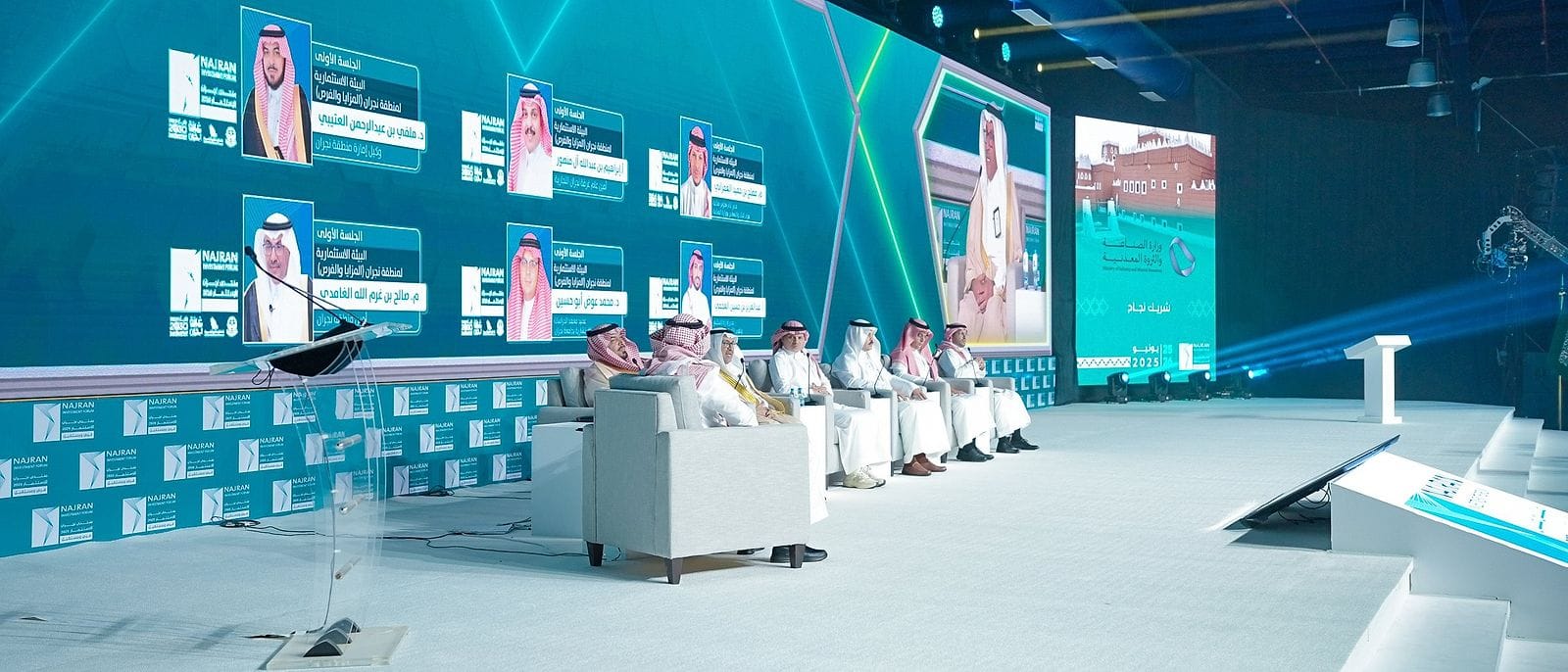
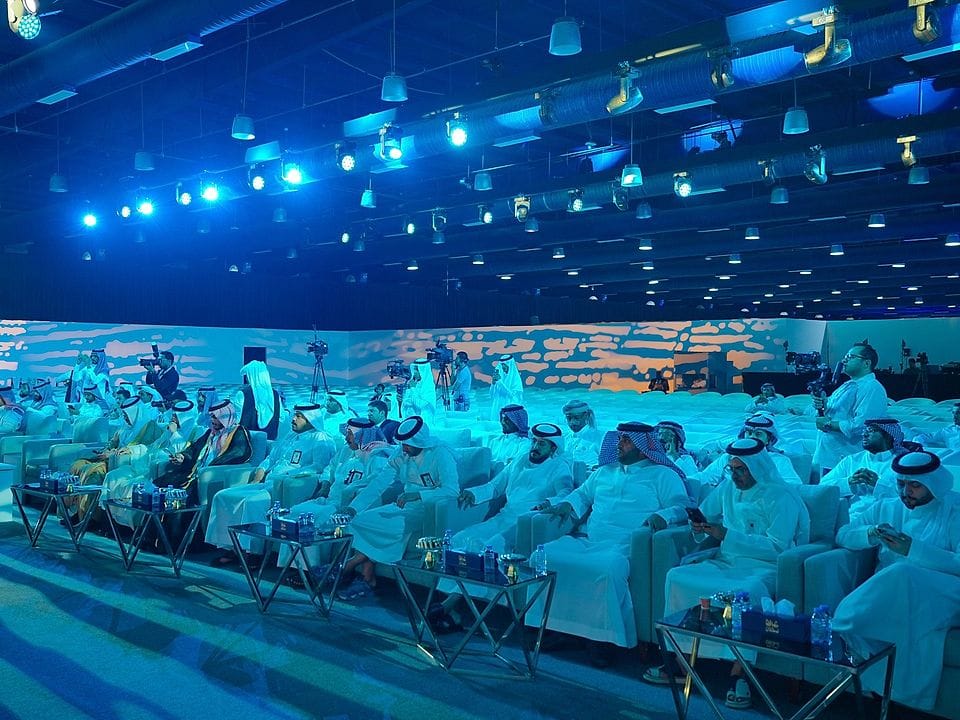
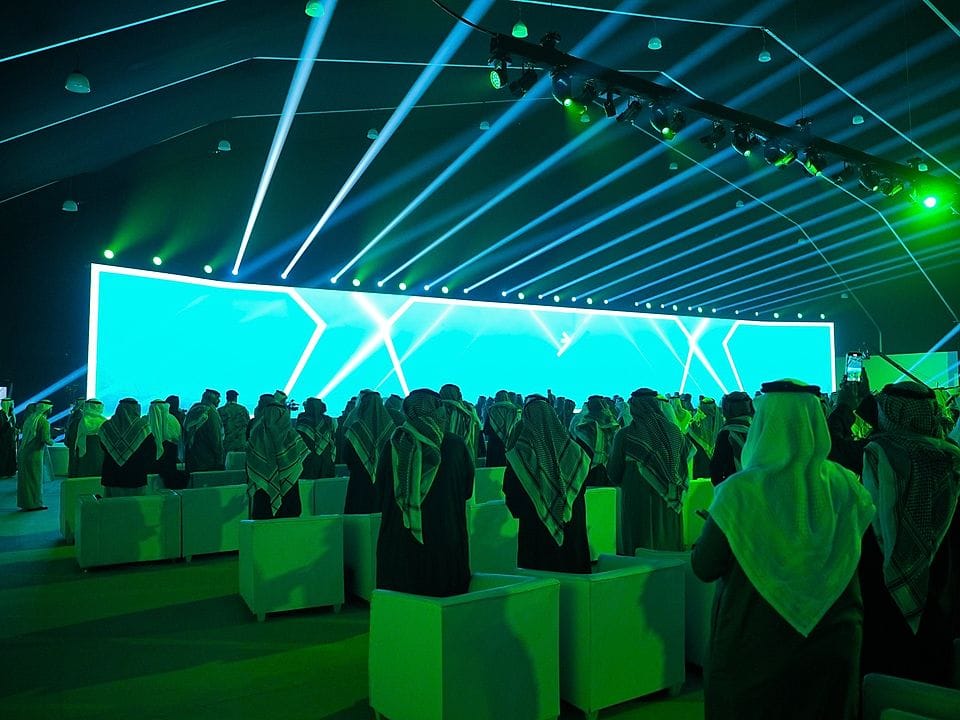
When the stage is wide, the hall is large and lighting is part of the design. At the Najran Investment Forum 2025 the grand hall sat under a full lighting ceiling, with wide-format screens on the main stage. Under a lighting ceiling of that scale a projector cannot hold a clear image, while an LED wall keeps its brightness.
At the Hafar Al-Batin Investment Forum 2025, the main stage used LED screens for branding, speaker names and videos between sessions. An LED wall also makes sense when the event is filmed or streamed, because cameras pick up a bright image clearly. Our field notes on Khobar make the same point: wide LED screens suit the broad hotel ballrooms there.
When is a projector enough, or better?
A projector is not the old option, just a different one. In a meeting room, a workshop or a breakout session with controllable lighting, it shows slides and tables clearly enough with a simpler set-up. In halls that cannot take a large frame or extra load, a projector is the practical choice.
At heritage and natural sites such as AlUla, our notes say subtle architectural lighting suits the setting better than large screens; projection onto a suitable surface, or no screen at all, can be the more beautiful answer.
How do you size the screen?
The simple rule: the further the back row, the taller the image needs to be, and detailed text needs a larger image than video. The screen size and viewing distance calculator gives a first estimate from the farthest viewer's distance and the content type, and works out a suitable LED pixel pitch from the nearest viewer's distance.
After the estimate comes a check in the room itself: ceiling height, columns, stage position and the viewing angle from the side rows.
What mistakes are common with both?
- Content not designed for the screen's proportions: slides in another ratio leave black bars or get cropped.
- Text that is too small: what reads on a laptop does not read from the back of the hall.
- Light spilling onto a projection screen: the image loses its colour for both audience and camera.
- An LED wall with a coarse pitch in a close room: the front rows see the dots.
- No technical rehearsal: videos, names and transitions need a full run-through before the opening.
Our article on screens, sound and lighting at conferences goes deeper into these mistakes.
What is Kunoze's verdict for each type of room?
- Main stage for a forum or large conference: an LED wall as a wide backdrop with content designed for it.
- Wide hotel ballroom for a corporate event: a wide LED wall or two side screens, depending on the room.
- Workshop or breakout: a projector or a ready-made display with controlled lighting.
- Filmed or streamed event: an LED wall, because it reads clearly on camera.
- Heritage or natural site: subtle architectural lighting and careful projection instead of big screens.
What drives the cost?
For an LED wall, cost moves with total screen area, pixel pitch, the supporting structure, rental days and technical operation. For a projector, it moves with the brightness required, the number of units and the screen size. Both add visual content, motion graphics and the control room, which the Kunoze team delivers as part of its AV service.

 Scan to chat on WhatsApp